The GABAR project is a four-year survey programme in western Cappadocia (Aksaray Province). Its first field season took place in 2025 with the permission of the Turkish Ministry of Culture and Tourism. The project is directed by Anaïs Lamesa (Bilkent University) under the auspices of the French Institute for Anatolian Studies (IFEA). Its main funding bodies are the French Ministry for Europe and Foreign Affairs, UKRI and the University of Edinburgh, the Laboratoire historique des rhétoriques, and Punto Company. The project also receives material support from Güzelyurt Municipality.
GABAR aims to:
– Train students and young specialists in survey, documentation and analysis
– Build an archaeological map of the area, documenting its rock-cut and masonry structures
– Understand the spatial organisation of the landscape and its communication routes over the long term
– Contribute to dating the monuments and the phases of use of the area
– Study the economy of stone and the building materials used
The study area
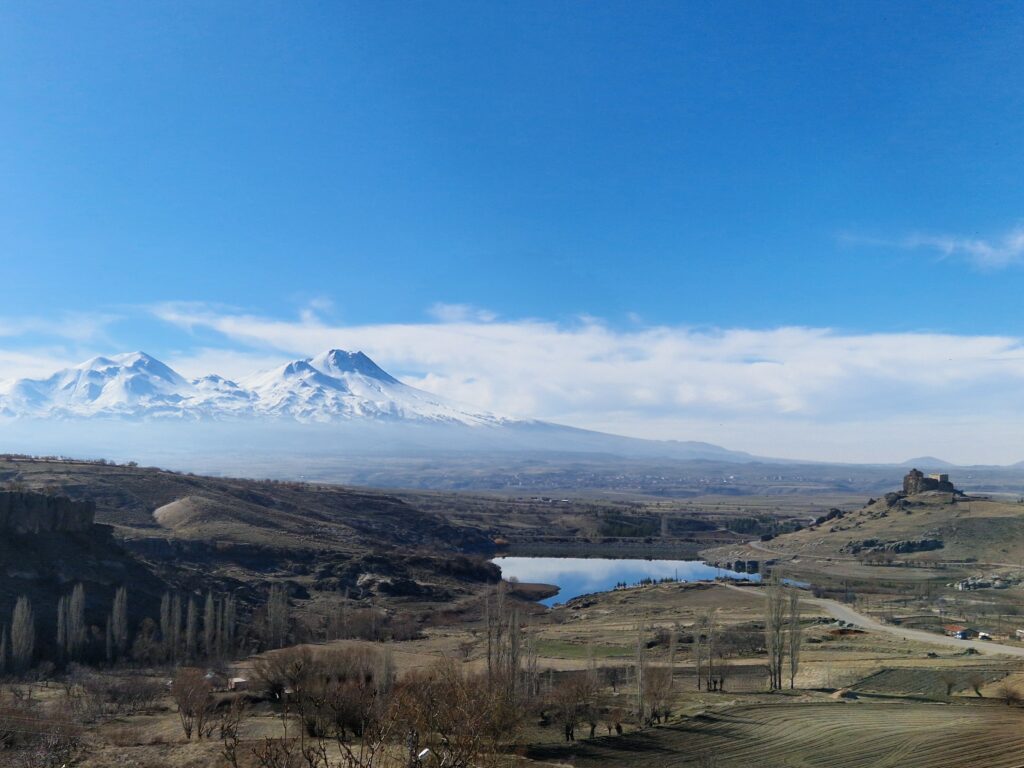
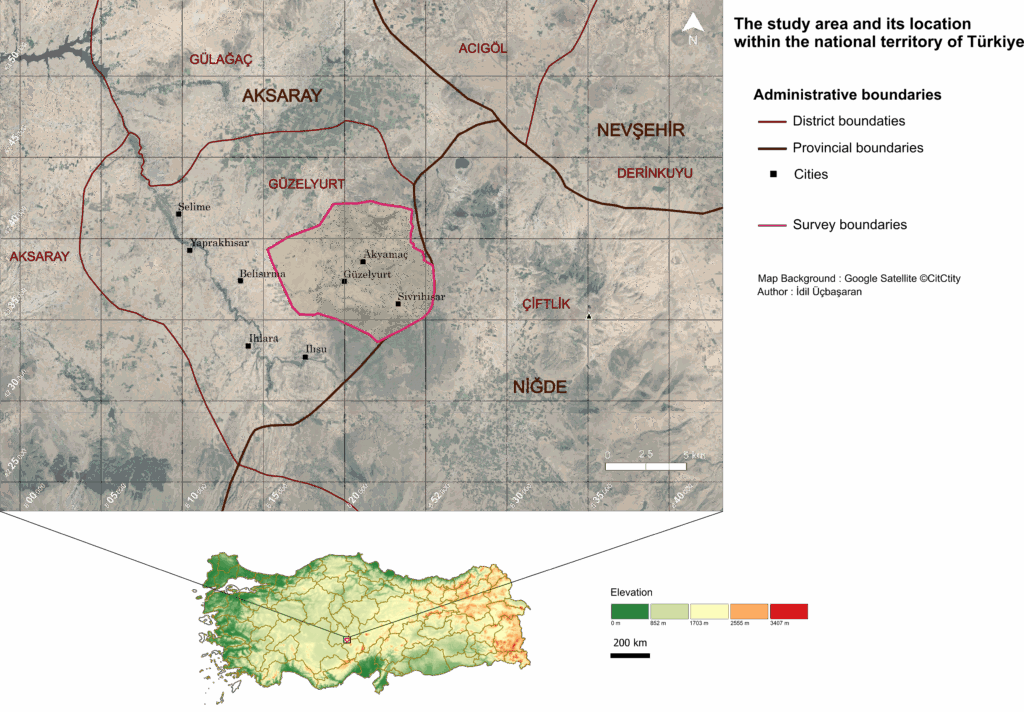
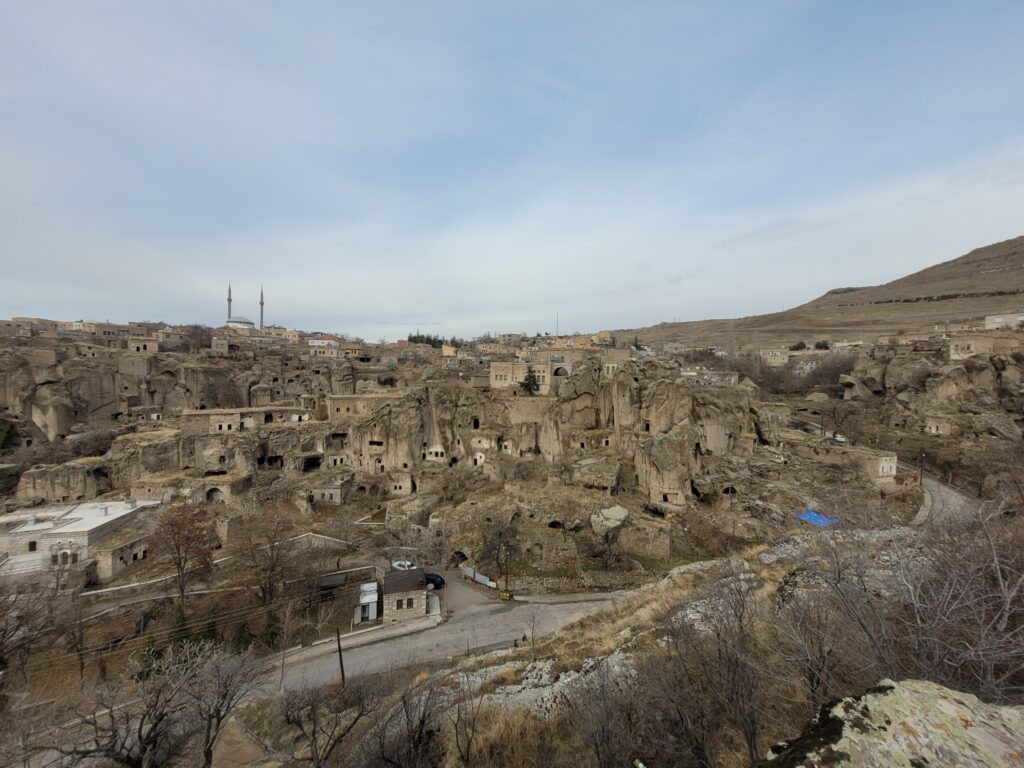
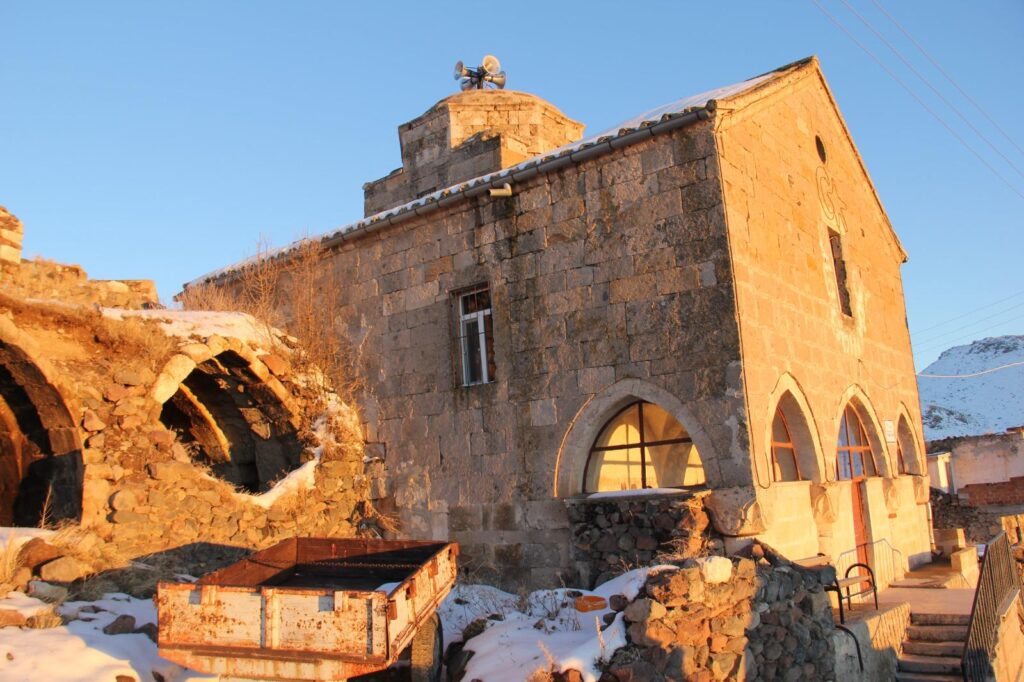
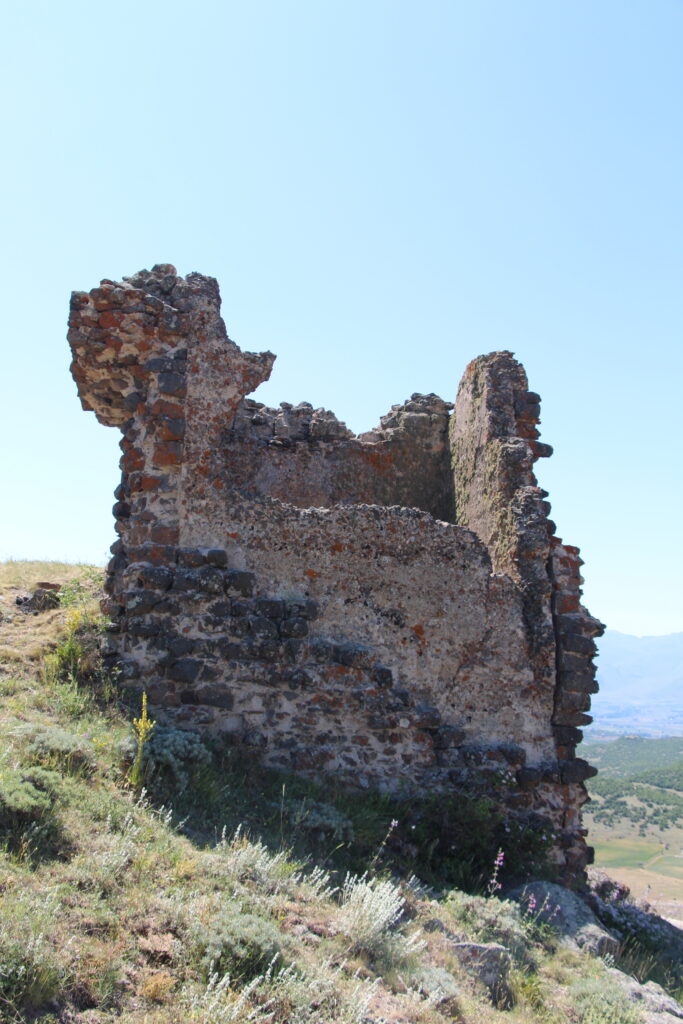
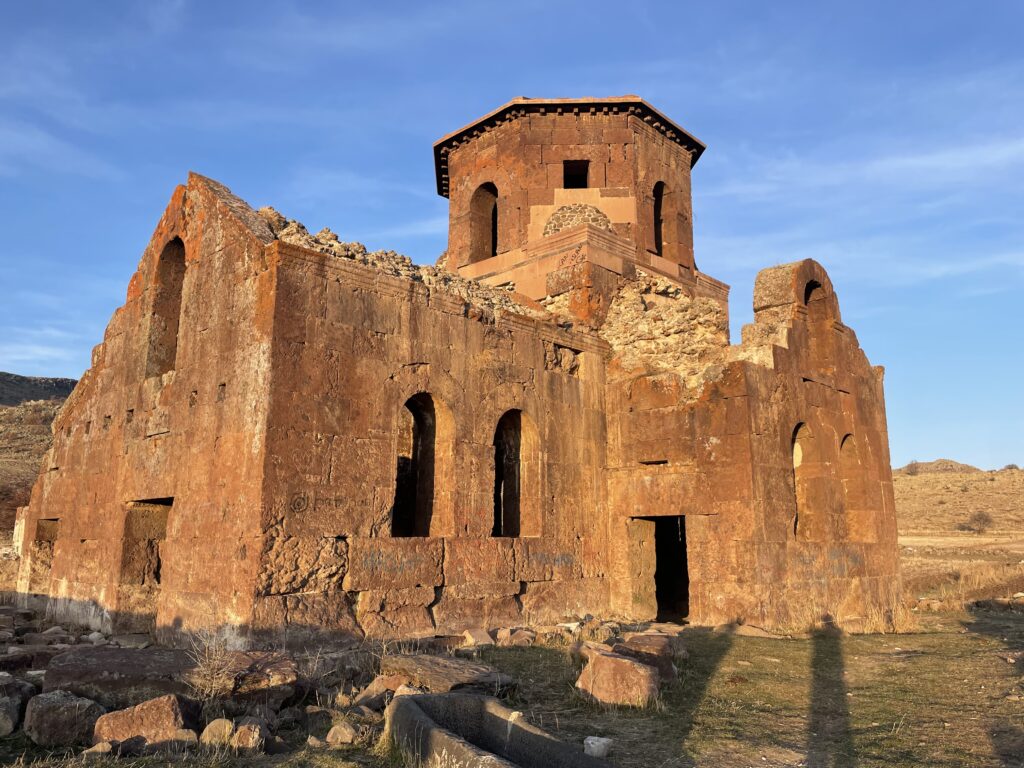
The research area covers the town of Güzelyurt and the villages of Sivrihisar and Akyamaç (Figure 1). Güzelyurt stands on a mesa cut by valleys (Figure 2) among them the Manastır Vadisi, whose cliffs contain numerous rock-cut structures, some of them painted churches. North of the town lies Akyamaç, whose former Orthodox church now serves as a mosque (Figure 3). Further south-east, the abandoned village of Sivrihisar is largely carved into the flanks of the hill that bears the Sivrihisar fortress (Figure 4). A valley leads from the village to a plain where the masonry church of Kızıl Kilise, the Red Church, stands (Figure 5).
Earlier research concentrated mainly on individual monuments. Francis Ainsworth (1839) and Gertrude Bell (1907) were among the first travellers to describe the area. After the Second World War, Jacqueline Lafontaine-Dosogne (1967) and Nicole and Michel Thierry (1963) inventoried the painted churches of the Hasan Dağı region. In the 1990s, Sacit Pekak (1993 and 1994) published the most comprehensive inventory of the churches of Güzelyurt, and Eugenia Equini-Schneider (1997) published data on the fortress and on rock-cut tombs. Excavations under the direction of the Aksaray Museum followed in the 2000s (2007, 2008, 2009).
The project
GABAR combines three complementary strands of work, all integrated in a GIS database. Campaigns last about four weeks each June.
The extensive survey covers the three settlements and their surroundings. Structures are located by GPS, photographed and described. Because rock-cut spaces are extremely numerous, those with a distinctive feature are recorded: a cross, a clearly identifiable function, arches, a lunette above a door, plaster remains or an inscription. This approach favours the valleys, where cliffs allow carving, and is less suited to densely inhabited villages.
The intensive survey targets selected sectors around monuments. In accordance with the regulations, only diagnostic sherds (rims, bases, handles and decorated body sherds) are collected. A typological catalogue of the pottery is being compiled, as no local reference series for medieval everyday wares has yet been published.
The scientific analyses are carried out with specialists from Turkish, British, French and Portuguese institutions. They include:
– the 3D documentation of churches and terrain by photogrammetry and drone, in partnership with IFEA, the University of Minho and UKRI / the University of Edinburgh
– the geology of the volcanic tuffs in which structures are carved and of ancient quarries
– the analysis of mortars and painted plasters, in partnership with IFEA, UKRI / the University of Edinburgh, Koç University, Institut Jean Lamour – Université de Lorraine, Laboratoire GeoRessources – Université de Lorraine and DTalent. Analysis funded by the ARPAMED foundation
– the study of the pottery, in partnership with IFEA, UKRI / the University of Edinburgh, the University of St Andrews, Newcastle University. Analysis funded by the British Institute at Ankara
– the 3D documentation of churches and terrain by photogrammetry and drone, in partnership with IFEA, the University of Minho and UKRI / the University of Edinburgh
Public outreach and training
Since 2024-2025 academic year, IFEA hosted a monthly research seminar, Cappadocia Making. It explored the landscapes of Cappadocia through archaeological, geographical and historical sources, and included a roundtable in Güzelyurt itself.
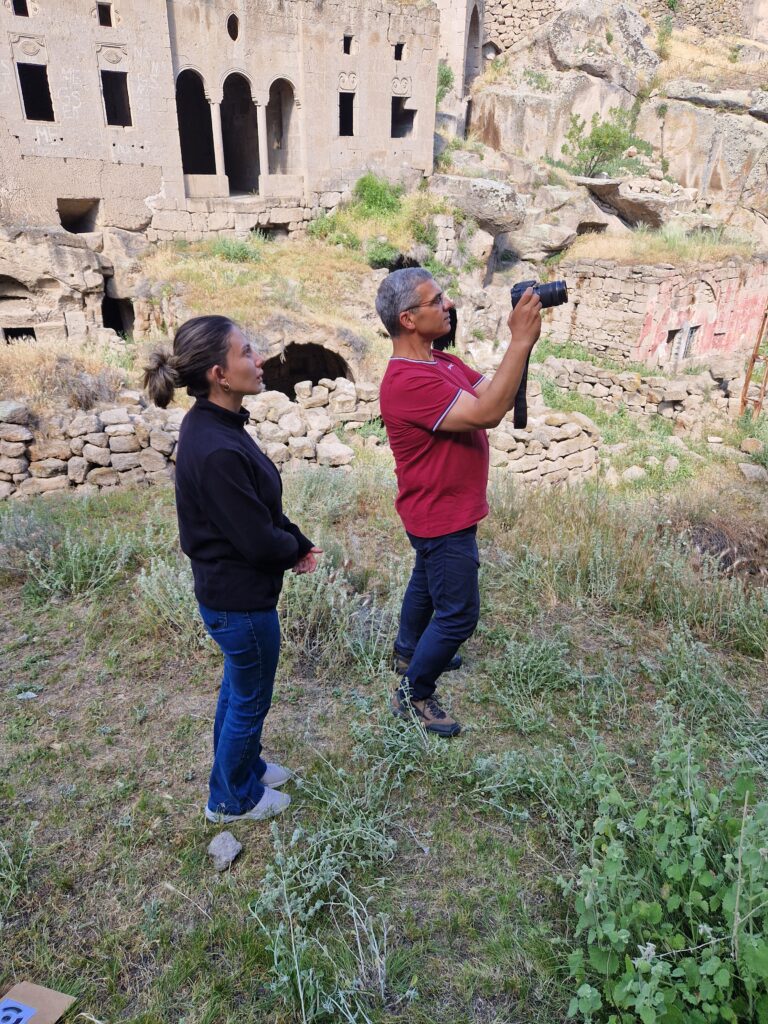
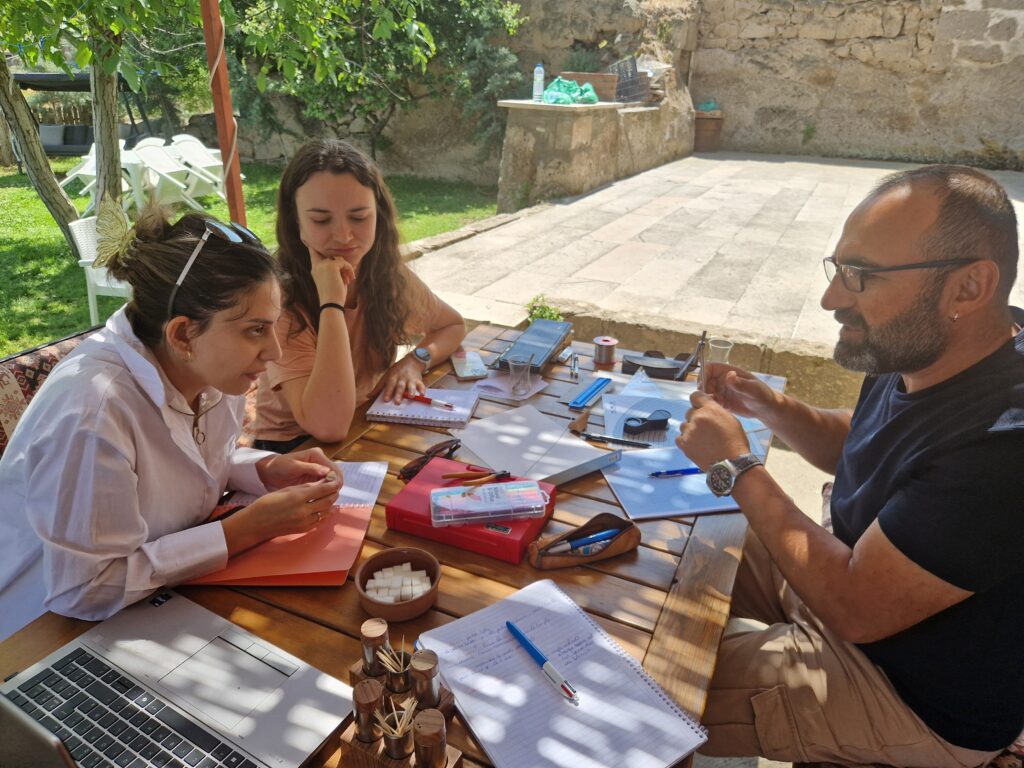
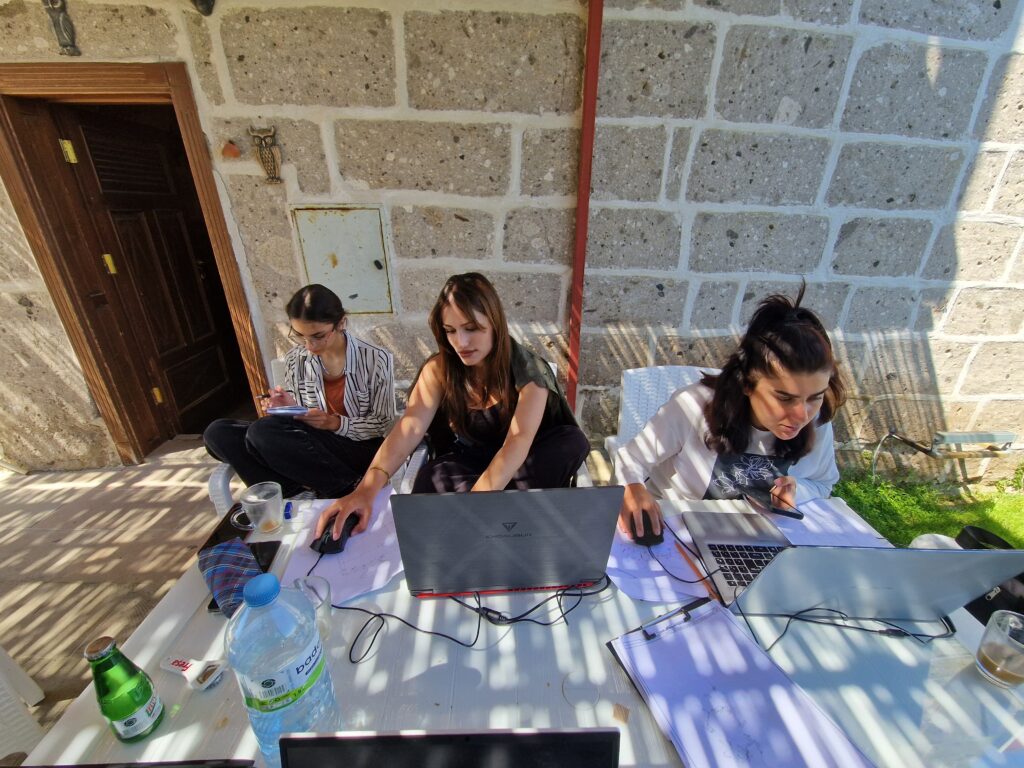
During the 2025 and 2026 field seasons, three workshops on ceramic drawing, 3D modelling and the digitisation of architectural plans were organised (see Figures 6, 7 and 8). The GABAR project also provides fieldwork material for two master’s research projects.
Further Reading
Ağaryılmaz, G., Y. Köroğlu, and Y. Kiper (2008). Kızıl Kilise’nin Etrafındaki Yerleşmede Yapılan 2007 ve 2008 Yılları Sondaj Çalışmaları. In S. Doğan, Kappadokia Bölgesi Sivrihisar’daki Kızıl Kilise, 64–71. İstanbul: Arkeoloji ve Sanat Yayınları.
Ainsworth, W. F. (1842). Travels and Researches in Asia Minor, Mesopotamia, Chaldea, and Armenia. London: John W. Parker.
Equini-Schneider, E., M. Spanu, C. Morselli, and C. Vismara (1997). Varia Cappadocia. Archeologia classica 49: 101–209.
Gülçür, F. S. (2008). Gelveri-Yüksekkilise 2007 Sondaj Çalışması. Türk Eski Çağ Enstitüsü Haberler Bülteni 25: 22.
Gülçür, F. S., and Y. Kiper (2009). Gelveri-Yüksekkilise 2007 Yılı Sondaj Çalışması. Kazı Sonuçları Toplantısı 30/4: 285–296.
Lafontaine-Dosogne, J. (1963). Nouvelles notes cappadociennes. Byzantion 33/1: 121–187.
Pekak, S. (1993). Güzelyurt’ta (Gelveri) bulunan Bizans/Post-Bizans dönemi kiliseleri 1. Hacettepe Üniversitesi Edebiyat Fakültesi Dergisi 10/2: 123–160.
Pekak, S. (1994). Güzelyurt’ta (Gelveri) bulunan Bizans/Post-Bizans dönemi kiliseleri 2. Hacettepe Üniversitesi Edebiyat Fakültesi Dergisi 11/1–2: 177–216.
Ramsay, W. M., and G. L. Bell (1909). The Thousand and One Churches. London: Hodder and Stoughton.
Thierry, N., and M. Thierry (1963). Nouvelles églises rupestres de Cappadoce. Région du Hasan Dağı. Paris: C. Klincksieck.
Main links:
Overall project: https://ifea-istanbul.net/projet-gabar-en/
On Mortars and Painted plasters analysis: https://ifea-istanbul.net/projet-gabar-analyse-des-mortiers-et-enduits-peints/
On Cappadocia Making seminar series: https://ifea-istanbul.net/seminaires-cappadocia-making/ (in French).